By Samantha Balles
In the year 2021, it’s no secret that the majority of our entertainment now comes in a digital form. Whether it’s music, sports, our favorite shows, or even the newest movies, society now heavily relies on apps and streaming services to access all types of content.
Last year, working around the obstacles that many different industries were faced with due to the pandemic, the music industry still saw a year of growth. Between retail store closings and live tour cancellations, music was depending on only its digital outlets, such as streaming services and social media apps, to stay afloat. Instead of taking a hit, the music industry seemed to find new ways to flourish. During that unforeseen time period, not only did the music music industry’s revenue reach its fifth year in a row of overall growth with a 9.2% increase, reaching a value of 12.2 billion, but streaming services saw an extreme spike in subscription purchases, according to the Recording Industry Association of America’s (RIAA) end of year report for 2020. Leading streaming services, such as Apple Music, Spotify or Tidal made up 83% of this total.
A new factor that’s playing a key role in this digital surge is the help musical artists are receiving from social media. One specific app, Tik Tok, became a large part of millions of new users daily lives back in 2020, when there was not much to do for a few months outside of our own homes. A snippet of a song will become popular on Tik Tok due to a dance or joke based off of it, and then its millions of users become encouraged to film and upload their own version of this trend with the song playing in the background. Around 63% of Tik Tok users will discover a new song or artist through scrolling on this app, and will then pull the artist up on a streaming service to hear the full version of the viral song. Not only do these viral Tik Tok “trends” expose it’s millions of users to new music to seek out on other platforms, but it pays royalties to the artists, just like a traditional streaming service would.
Similar to Tik Tok, other social medias like Instagram and Twitter have features that allow you to add music to a post, or “story”, which leads to the same process where a user will then search for a new song they’ve been exposed to on a streaming site. Social media has opened up a brand new window of opportunity for artists, which was tremendously realized last year.
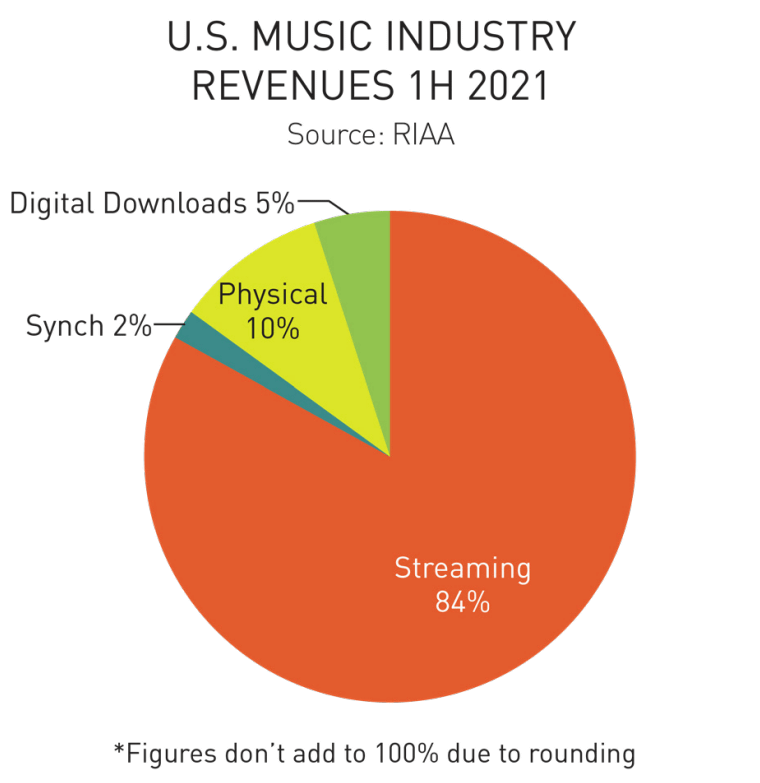
Although this soar for the music industry was the result of our period of isolation, it seems like these methods for music distribution won’t be going anywhere. The RIAA released their mid year revenue statistics report for 2021. Streaming services makes up about 84% while digital downloads are making up about 5%, which means about 89% of recorded music’s revenue is coming from a digital source. As of 2021, only about 10% of revenue is coming from physical copies, which includes CDs and vinyl records.
The chart below shows the growth of different streaming options from 2019- 2021. All three of these years, streaming services occupied the majority of the overall revenue percentage, and as the years go on there has been an evident increase in these already dominating percentages.
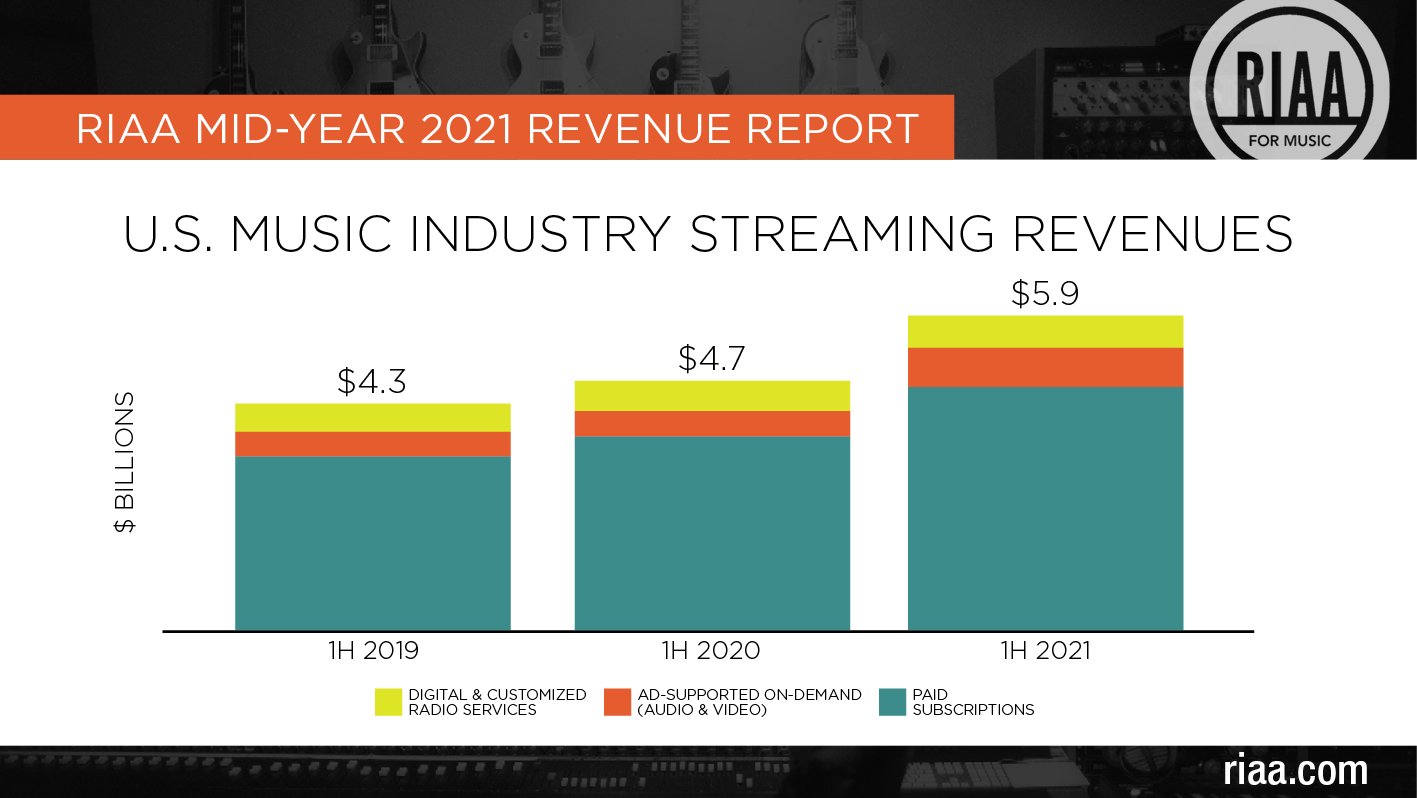
For paid subscriptions alone in 2021, there was a new record of 82 million users, and this number is not even counting multi-user subscriptions as more than one. This number is 13% higher than it was for 2020, which was 73 million. With last years huge dependency on digital sources for music, to have an even larger spike in 2021 likely suggests the digital shift we encountered when society was confined to their homes last year has opened up new opportunity for the music industry that is not leaving anytime soon.

 Data Journalism 395