By: Aliyah Rodriguez
Members of New York City’s homeless population continue to face uncertainties as the pandemic wages on.
A major concern for New York City at the center of the COVID outbreak over the past few months has been the city’s homeless population. Early in the pandemic, when health professionals were relaying information about the best practices for containing the virus, many looked towards homeless shelters and how it may be harder for the homeless to social distance in such close proximity to each other. While temporary solutions were provided by the city during the outbreak, the city is now looking toward the future for more permanent solutions to this issue.
The Bowery Mission – an organization that has been aiding the homeless in NYC since the 1870s – state on their website that nearly one in every 106 New Yorkers is homeless, adding up to nearly 80,000 men, women, and children. These numbers could potentially rise due to so many of the city’s residents being laid off due to the pandemic and not being able to pay their rent.
During the early months of the pandemic, the city’s Department of Homeless Services moved nearly 10,000 people out of shelters into 63 hotels across the city due to concerns over the quality of life and unsanitary conditions in the overcrowded shelters.
As a temporary solution in August, 282 homeless men were moved to the Lucerne – a luxury hotel that would charge $200 a night prior to the pandemic – in the Upper West Side. This was not the first homeless relocation conducted by the city, in May shelter residents were moved into the Park West, the Belleclaire, and the Belnord hotels in the Upper West Side, the neighborhood houses about 730 homeless people by the end of the summer. Many in the community complained about the presence of the homeless, however, and a battle was sparked over where to relocate these individuals.

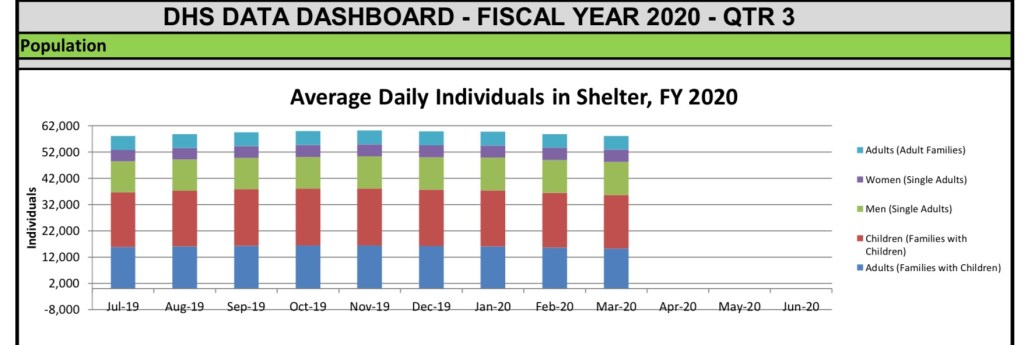
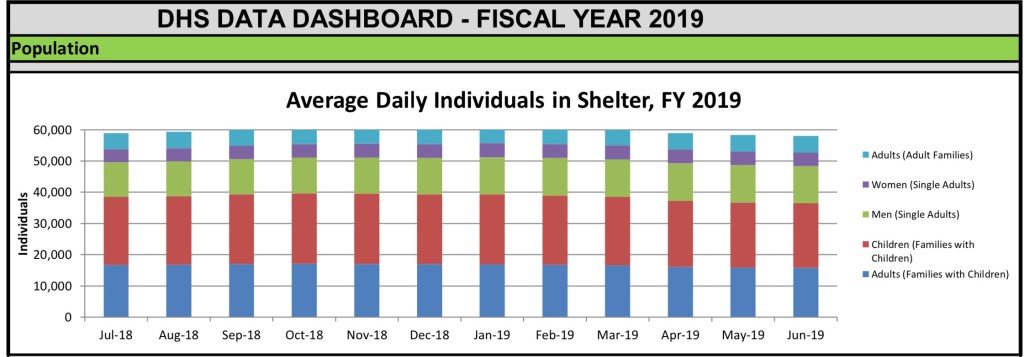
According to the Department of Homeless Services, the homeless rates in March were down seven percent for families with children, three percent for adult families, and rose four percent for homeless individuals in comparison to the figures from March 2019. State mandated shutdowns began mid-march, however, and the effects were felt by the homeless in the months afterwards. The DHS has not yet updated their website to include statistics from April to now.
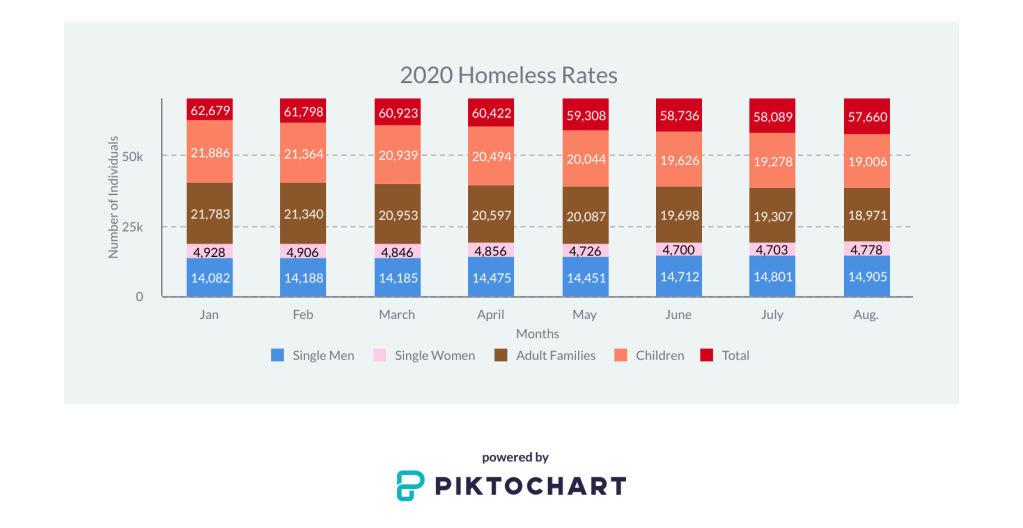
The Coalition for the Homeless presents more up-to-date and exact numbers of the homeless rates in the city, since the information from the DHS’s website stops in March, just as the state began its shutdowns. According to their website, in August 2020, there were 57,660 homeless people, including 12,866 homeless families with 19,006 homeless children, sleeping each night in the New York City shelters. These numbers don’t account for the city’s homeless that sleep elsewhere like on the streets, in the subways, and in parks.
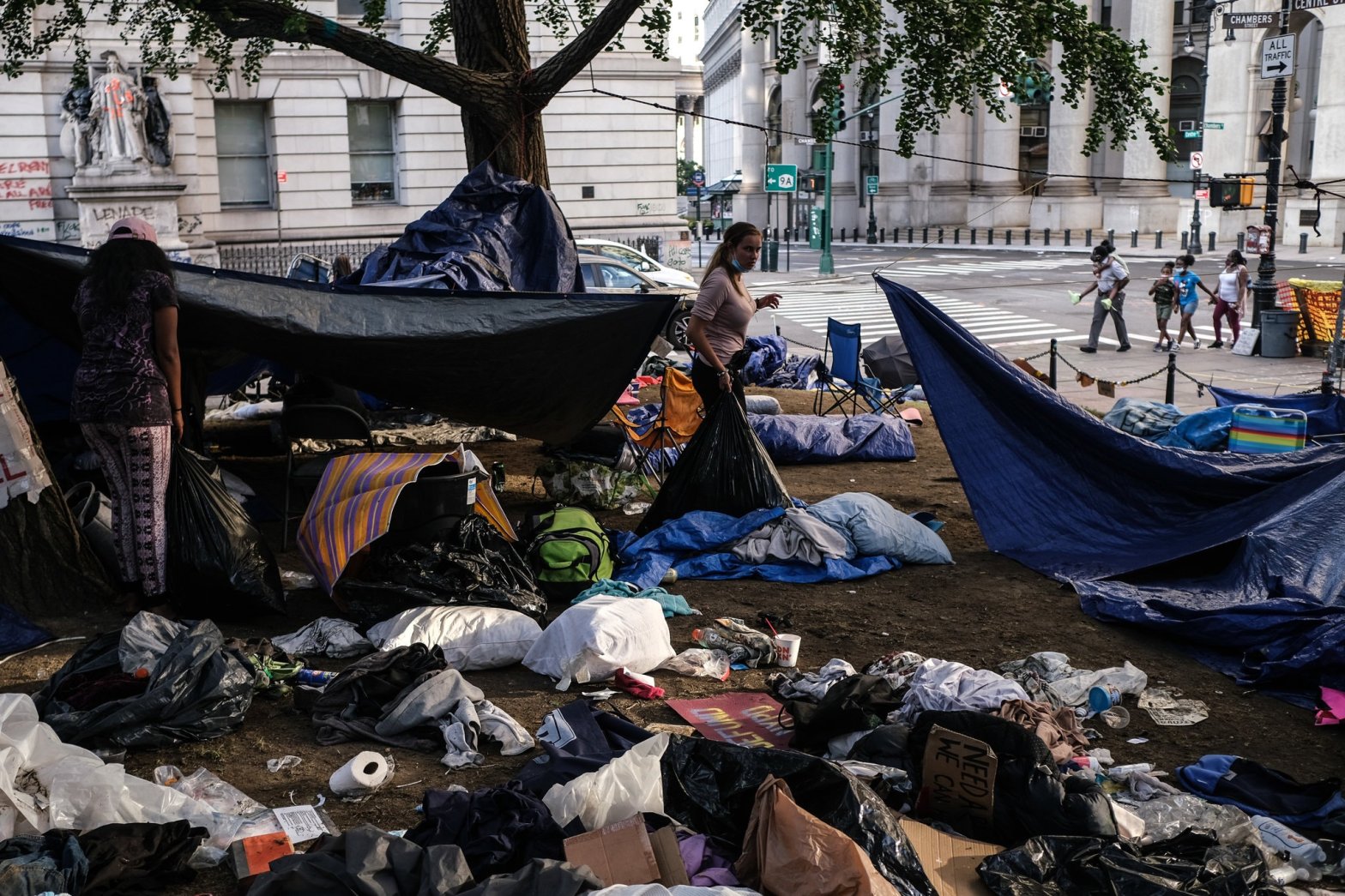
On June 23rd, about 100 people set up camp outside of the City Hall to influence the city council to cut the New York Police Department’s funding in the wake of George Flloyd’s murder. Within a week, the small patch of grass that held the protestors became a makeshift community where over 100 people – consisting mostly of the homeless – slept in tents. The community offered food services, help-yourself clothing bins, hand-sanitizing stations, and other forms of community support such as a makeshift mental health check-in tent where licensed professionals advised those suffering from trauma, addictions, and mental illness. Organizers of the camp criticized the city by saying that their efforts to help the homeless was doing what the city had not: addressing the needs of its most vulnerable residents.
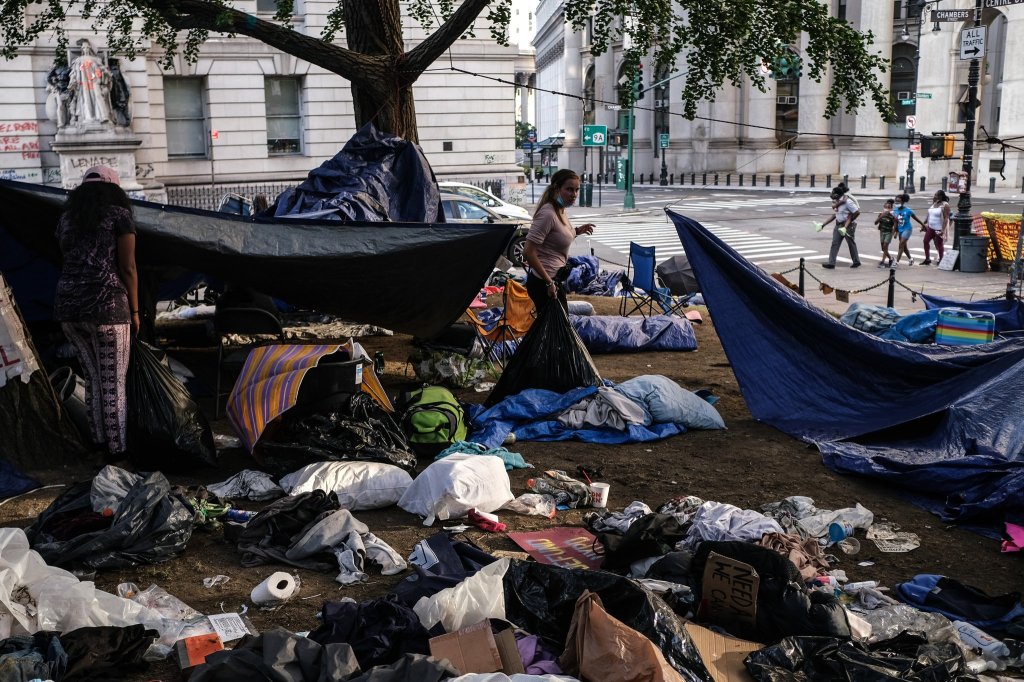
On July 22nd, police officers in riot gear cleared out the encampment, displacing the homeless once more, after many complaints from community members about it becoming a “shantytown”.
New York’s City council website provides a roadmap to the city’s solution of the homeless crisis, but in the age of COVID-19, many are wondering how effective these plans will be as the homeless population grows.
With COVID cases on the rise again, we’ll have to wait and see what the future holds for the city’s homeless population.




 Data Journalism 395